Six writers. One blog. And the "dish" de jour.


We Want You!

Your comments and feedback are encouraged and welcomed. Please leave advice, tips, suggestions, experiences and anecdotes.
Showing posts with label writing tips. Show all posts

Sunday, October 28, 2007

Character Names II

Did anyone read a fantastic book this week? I'd love to hear your recommendations. Did the names in the book work? Were they great? Why?

After a long work week and I am still focused on the topic of character names. See previous post. What if authors chose different names for the following works. Can you come up with a better name?


In my opinion the following names make a compelling case as to the impact of a well character moniker.


  • Huckleberry Finn

  • Catch 22's Yossarian.

  • Hester Prynne and Roger Chillingworth - The Scarlett Letter

  • Lennie and George - Of Mice and Men's

  • Sookie Stackhouse and Bill from Charlaine Harris' books

  • Thursday Next by Jasper Fforde


Now read A Midnight Clear by William Wharton. Every character has a great name and nickname, too. Or cheat a little and rent the DVD, the film is good too.


Till next week, "Same Sparkle Time. Same Sparkle Day."


    Tuesday, September 4, 2007


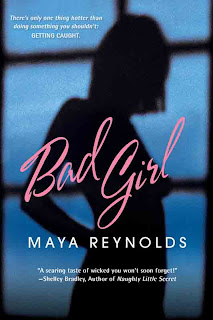
    Joining us today at SPARKLE THIS! is first-time author Maya Reynolds. Maya’s debut novel, BAD GIRL, is being released today by New American Library, a division of Penguin. It’s an erotic romance. Frequent Barnes & Noble’s reviewer Harriet Klausner gave it five stars.

    BAD GIRL is the story of Sandy Davis, a shy social worker who accidentally begins spying on her neighbors in the apartments across the street from hers. She quickly becomes addicted to observing the lives of others--a young couple who engages in kinky sex, an anorexic model, a frequently ill elderly woman and, of course, the man she calls “Mr. Dominant,” who engages in aggressive bondage games.

    One night, Sandy receives a phone call from an anonymous male who says, “You’ve been a bad girl.” He calls himself “Justice,” and he has a pastime, too. Watching Sandy watch others. He has the photos to prove it. Now it’s his turn to play--by making Sandy pay the price in exchange for holding onto her naughty little secret.

    As the sensual dance between two strangers begins, so does Sandy’s fear that she’s moving closer to the edge of extreme desire--and inescapable danger.

    Two Lips Reviews gave it five lips and said, “This is a fast-paced, exceptionally engaging book. Add a suspenseful element of danger and an ending that keeps you on the edge of your seat, and you’ve got a phenomenal read.”

    SD: Maya, let’s start with the question we always ask our guests. What makes a book really sparkle for you?

    Thanks for inviting me here today.

    When I read for relaxation or entertainment, I’m looking for a specific emotional experience. With a romance, I want the thrill of new love, that excitement that comes as people begin to share their intimate thoughts and feelings.

    If, like me, you’re a big reader, after a while, plotlines seem to run together. There are no surprises. I’m always looking for that book that will catch me off guard, take me down a different path from the one I’m accustomed to traveling.

    After all, when you read a romance, you know that it is going to have a happily-ever-after ending. It’s how you get there that makes you pick up the book.

    SD: Since you’re at the beginning of your career, it might help our readers to know what you wish you’d known before you started out.

    Although I’d sold short stories and articles over the years, I was really as ignorant as an egg when I began writing my first novel in 2003. There are three things I’ve learned since that I wish I’d known then:

    First, get your critique partners early before your bad writing habits get set in stone. It’s a lot easier to fix problems while you’re writing the manuscript than having to overhaul it after the fact.

    Second, begin networking early. I waited until 2005 to join RWA and Sisters-in-Crime. I spent nearly a year playing catch-up. If I’d joined at the same time I started writing, it would have been very helpful. After all, that’s how I met the Sparkle This! authors.

    Third, learn everything you can about the publishing industry. Like any other business, there is a special language and unique practices. You need to understand terms like “basket accounting,” “sell-through percentages,” and “cooperative allowances.” You need to know what the differences are between hardback books, trade paperbacks and mass market paperbacks. I’ll give you a hint--it’s not just the book size or the kind of covers.

    SD: Is there any special word of advice you'd like to give aspiring writers?

    Yes, never give up, Never Give Up, NEVER GIVE UP.

    Don’t regard rejections as the end of the line. Look at them as opportunities to learn. I sent my queries out in batches of six. At the same time, I kept seeking feedback everywhere I could get it--from published writers, from workshop instructors, and from writing manuals.

    In the beginning, all I got were form rejections. I kept revising both my query and my first six pages. The day I got my first scribbled note of encouragement on a rejection letter, I celebrated. Shortly after that, I got a personalized letter from an agent with suggestions for that manuscript. Then I got a rejection letter that asked to see my next manuscript. I just kept writing and revising.

    I clung to something Joe Konrath said:

    “What do you call a writer who doesn’t give up?”

    Published.

    Good luck!


    SD: Thank you, Maya. And thank you all for joining our guest blogger for the day.

    You can find Maya at her blog MayaReynolds.blogspot.com or you can reach her by email at MayaReynoldswriter@sbcglobal.net.

    Be sure to leave your questions or comments for Maya in the “Sparkling Comments” section. We love to hear from you!

    Until then, Happy Writing!

    Sherry

    Sunday, September 2, 2007

    Mood and Writing


    Today I wrote with enthusiasm, my imagination and characters skipping happily from page to page.

    But then something happened. I disappointed a friend and colleague and was reprimanded. Now my innate nature makes me the poster child for self-castigation. My mood changed. I am angry with myself for failure to live up to expectations. I’m sad that I may have caused another pain or difficulty.

    And the tone of my writing, my voice changed. Drastically. My heroine is so positive, she makes Pollyanna look bad. I was not able to write the story - instead my brain sent my fingers flying across the page in self-recrimination. I needed the return of euphoria and optimism to continue my WIP.

    A revelation occurred. When I wrote the short story, A Kiss from a Rose, my feelings were of loneliness and unease. The tone of the story was dark, scary and hopeful. I can use my moods to help write certain aspects of my stories. Think of Edgar Allan Poe, what was his state of mind and emotions?

    Perhaps others with even temperament won’t find this helpful. But now that I am cognizant of the impact my emotions have on my voice, I plan to use this to advantage. In One Demon at a Time, it was difficult for me to kill one of my characters. I knew he had to die but I anguished over the scene, rewriting and rewriting. If I had a healthy does of rage, I probably could have offed him with dispatch.

    I plan to use my emotions to advantage in my stories. I’m moving on to a scene in ODAAT 2 where my heroine is floundering in self- recrimination, a result of a deadly mistake.

    Using the emotion in writing is excellent therapy, too.

    Does your storytelling voice change with your mood?

    Sunday, August 26, 2007

    4 Elements of a Logline - One line plot description

    Save The Cat by Blake Snyder, Summary of Chapter One – What Is It?

    A log line is a movie/screen writing term for a one or two line description of the story. Snyder says screenwriters can sell their screen play if they have the following 4 elements.

    1) Irony- A good story will have a twist.
    Identify the conflict. Mention the protaganist (Hero/Heroine) and the antagonist to involve the readers emotions.
    2) Target Market.
    For the author of novels this would be the publisher and genre. Does the description provide an idea of the reader/market?
    A bookstore is divided by genre to engage the target market. Readers that enjoy romance, young adult section, mystery, scifi, etc. head to the labeled section. A blurb on the back, though longer, tells the reader what the story is about.
    3) Create a mental picture.
    Does the description give the potential reader a visual idea of what the book/movie is about?
    4) Killer Title.


    Snyder says if the logline has these elements your pitch will be successful. Even better condense the movie for the marquee and – voila!

    So we may not be screenwriters, but as authors if we heed Snyder’s advice we have a better chance of selling our book to the publisher and the reader.

    What books do you think are good examples?

    After sharing your good examples, I thought a look at some well known books would be interesting. I love all these books but if someone hadn't recommended Outlander I never would have read Gabaldon's work. What title and description would you give for any of the following?

    Outlander, Diana Gabaldon
    Twilight, Stephanie Meyer
    To Kill A Mockingbird, Harper Lee
    Fahrenheit 451, Ray Bradbury
    Guilty Pleasures (Anita Blake Vampire Hunter), Laurell K. Hamilton

    Saturday, August 4, 2007

    Insider Secrets

    Quick matching game to get us started today. Match the NY Times Bestselling authors below with their best sparkle tip:

    1) Suzanne Brockman
    2) James Patterson
    3) Nora Roberts

    a) write each chapter as if it's your first
    b) write dialogue heavy in the first draft, with minimal stage direction, to ensure pacing and characters will be just right.
    c) for deep point of view, write scenes initially in first person.

    Too easy? Maybe. Here's some more sparkle from Sophia Nash and Kathryn Caskie's Tricks of the Trade: Insider Secrets to Getting Published workshop, in which they asked over twenty five bestselling authors what it takes to get published, write a bestseller and stay published:

    When writing romance, it's important to give the love story a life or death depth all the way through. Strive to capture a little of the desperation we all felt when we first fell in love.

    Don't underestimate the importance of the reveal. Be sure to give the reader hints along the way, but craft important, plot changing arcs with the most impactful moments of revelation.

    Characters emerge best through dialogue. Write dialogue-heavy first drafts and be prepared to cut one third of it in revisions.

    Settings cannot be stagnate. Reveal setting only as your character reacts with it.

    Answers to matching found in comments section. . .