I just finished the movie Man of the Year, with Robin Williams. For those who haven’t seen: Robin Williams plays Tom Dobbs, a satirical, political comedian who ends up running for President of the United States and winning. The hitch – there was a computer glitch in the voting system (wow! Doesn’t that sound like real life?) and he wasn’t actually, legally, technically elected.
Tom Dobbs learns about the computer glitch from the head female computer programmer of the company hired to develop and oversee the voting machines. Can Tom Dobbs believe this woman who spouts technical information regarding his actual loss in the race? Is she crazy? On drugs, as voting machine company keeps inferring? Someone with an ulterior agenda? Or is she legit and he, as President-elect, the fraud?
Hence is born: an unlikely hero.
I’ll not tell you whether he accepts her truth as his truth. It is the dilemma of this movie that reminds every writer of our central purpose: CONFLICT!
Not just any simple-minded conflict, but the internal, tear-your-soul-out kind of conflict we must inflict on our characters. Without conflict, will a reader care what happens to our hero? Our heroine? Never.
Think back on great literature . . .
Sense & Sensibility – ah, certainly there are any number of heroes and heroines on these pages. But they weren’t unlikely choices. They did what I expected. Pride & Prejudice, same thing. Don’t get me wrong. I love these books. But these characters weren’t unlikely heroes. Only people who ultimately did the right thing.
Something I more recently read, however, fits the bill.
Claiming the Courtesan by Anna Campbell. Simple farm-girl Verity Ashton cashes in on her exceptional beauty by becoming London's most sought-after courtesan in order to save her younger siblings from starvation. Does she have a choice? Not really, not as the story unfolds, but through her struggle to entertain men and not lose her own inner identity, the reader sympathizes, empathizes and roots for Verity. When opportunity finally presents the chance to return to a simple way of life, Verity seizes it. Her stint into proper society doesn’t last as her most recently spurned lover tracks her down and destroys her image of propriety. Verity has every right to despise this man, but her innate sense of honor and dignity prevails once again. Instead of destroying him, she saves his very soul.
Hence is born: an unlikely hero. Or in this case an unlikely heroine.
The pay-off for this type of conflict is dramatic and satisfying. It isn’t about a character doing the right thing . . . or following what they’ve been brought up to believe. It’s deeper, darker, more painful and the suffering is shared with the reader, who not only want this character to survive, but to thrive.
Share it: story you love the best with an unlikely hero or heroine.
Until next time
~ Sandra
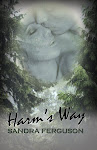
PS ** I have another book-signing at Barnes & Noble scheduled for September 6th, 2007 @ 7:30pm. I'll be signing HARM'S WAY.
Friday, August 31, 2007

Wednesday, August 29, 2007
Theme : It's Not A Dirty Word.

When I first started writing, I didn't think about theme. I'm a plotter not a pantser. I could wade deep into a story before I realized there was an undertow of emotions wrapped around the characters, a central emotional element tugging them toward some intangible inner crisis.
It was not unusual for me to plot a whole book. Write the dang thing and still not quite grasp the theme.
I think I had a mental block. Theme implied those God-awful term papers in highschool that made my brain hurt and my eyes glaze over.
It wasn't until a few years ago that I opened an old file from a backup disk and started reading a story I loved but that had been rejected by a publishing house. There was a vague comment about the
And of course, I realized the timing just stunk. Who could've guessed?
It was about a D.C. reporter who'd nearly been killed by a terrorist bomb in the capital. (Yeah. Spooky.) This life-changing moment put my hero's entire life in perspective in an instant. While recuperating, he decides to leave D.C. and return to his wife and two daughters he'd left behind to pursue his high-profile career. But before he can make good on his intentions, he receives a letter from his youngest daughter informing him she's getting a new daddy.
I realized within the first few pages that the theme of the novel was redemption. And through taking a thorough look at all the other books I'd written over the years, I realized that I went back to the same themes over and over.
Redemption. Second chances.
In the worlds I'd created, all my heroes and/or heroines were royal screw ups (in one form or another-either deliberately or because they allowed themselves to become blinded by something in their true nature). But when faced with right motivation and opportunity to redeem themselves, they did. Not only was I writing this theme over and over, I was also reading it. My keeper shelf was full of redemption stories. Even my DVD collection was weighted with underdogs trying to right a wrong they'd created for themselves.
Once I established this, I realized I was drawn to flawed characters, the more fatally flawed the better! Flaws give characters a rooting interest and make them interesting on multiple levels.
Some part of me recognized there were things in my own life I wanted a second-chance to get right--a do-over. It'll never happen because I live in reality. But there's a part of me that can still remember the sick pit in my stomach over missed opportunities, misguided loyalty or an impulsive overly critical remark.
So, if you're looking for the theme in your current wip, try looking in the mirror. And take an honest look.
What do you care about? What do you wish? What do you want more than anything? What is your least favorite/most favorite characteristic in others? In yourself? What are you most proud of? Most ashamed? Which emotion do you find hardest to deal with? In yourself? In others? (Ideally, write down 20 questions and answer them as quickly as possible. No editing! --yes, it may seem bleak or harsh when you go over it later. That's okay.)
Every answer is a universal theme; universal because they're shared by all of us at one time or another. Keep a list of the top five that draw you. Chances are, you'll find you use variations of the same theme or themes over and over. This isn't a bad thing. I think I've actually grown as a writer and as a person by analyzing not only my characters but why I'm drawn to these themes.
Finally, if you allow yourself a chance to connect with the themes in your real life, you'll have a far better handle on the themes that circulate in your work. And perhaps, like me, will find that theme is not a dirty word.
Sparkle on!
Tuesday, August 28, 2007
Guest Blogging -- Teresa Southwick
Joining us today at SPARKLE THIS! is Teresa Southwick, author of 4 historical and over 25 contemporary romance novels. A two-time National Reader's Choice and one-time Rita finalist, she was also a Romantic Times Magazine Reviewer's Choice double nominee for Career Achievement and Best Series Romance for 2003. A native Californian, she recently relocated to Las Vegas where she is neglecting the casinos while working on her next book.
Teresa's most recent release, THE SHEIKH'S CONTRACT BRIDE was a June 2007 release from Harlequin Romance. This phenomenal read pits Sheikh Malik Hourani, a Crown Prince, against one very determined school teacher, Beth Farrah. Sheikh Malik understands duty and honor, and hates a liar. He is ready to fulfill his family obligation by marrying and producing heirs to the throne of Bha'Khar. Only one small problem stands in his way: the woman he's been betrothed to since birth will do anything to keep from marrying him -- even telling a whopper of a lie. For those who enjoy characters who leap off the page with their strong wills and sexual tension that singes the pages, then THE SHEIKH'S CONTRCT BRIDE is a must read.
Teresa graciously agreed to sit down and let us in on a few publishing hints. So slid into your comfy slippers and tell the kids to leave you alone, here's what Teresa said.
SF: What makes a book sparkle for you?
SF: What is the best advice you ever received?
SF: Which of your books do you like best? Why?
SF: Any final advice?
Happy writing everyone!
Terry
Teresa Southwick also writes for Silhouette Special Edition. She just finished an inline continuity book. PAGING DR. DADDY will be out in March 2008. In April her new series for the line—Men of Mercy Medical—will debut with THE MILLIONAIRE AND THE M.D.
On a personal note: It has been my pleasure to critique with (she does most of the critiquing of my work, I just occasionally make a suggestion on hers) for a number of years. Terry gives unselfishly of her publishing and writing knowledge to any who ask. On a book note: If you aren't reading Teresa Southwick -- you're missing a treat!
Thanks for joining our guest blogger. Be sure to leave your comments or questions for Terry in the 'Sparkling Comment' section. We love to hear from you.
Happy Writing
~ Sandra
Teresa's most recent release, THE SHEIKH'S CONTRACT BRIDE was a June 2007 release from Harlequin Romance. This phenomenal read pits Sheikh Malik Hourani, a Crown Prince, against one very determined school teacher, Beth Farrah. Sheikh Malik understands duty and honor, and hates a liar. He is ready to fulfill his family obligation by marrying and producing heirs to the throne of Bha'Khar. Only one small problem stands in his way: the woman he's been betrothed to since birth will do anything to keep from marrying him -- even telling a whopper of a lie. For those who enjoy characters who leap off the page with their strong wills and sexual tension that singes the pages, then THE SHEIKH'S CONTRCT BRIDE is a must read.
Teresa graciously agreed to sit down and let us in on a few publishing hints. So slid into your comfy slippers and tell the kids to leave you alone, here's what Teresa said.
TS: I’m delighted at this invitation to guest blog for “Sparkle This.” Books have been a joy for me since learning to read and I think it’s a wonderful endeavor to analyze just why certain books earn a revered place on our “keeper” shelf. So, here goes.
SF: What makes a book sparkle for you?
TS: I’d have to say it’s the characters, and by extension, their dialogue—internal dialogue, too. If I’m going to spend precious time with these people, I want it to be fun, witty, and emotional. Make me laugh and cry. From a writer’s standpoint, in my own work I take a hard look at passages that have more that one page of character introspection. In my opinion, and it’s only mine, any more than a page of dense introspection slows story pacing. It’s important to look at what information can be revealed in dialogue between your main characters. Otherwise readers, and I’m one, will scan forward to look for where the characters finally talk to each other.
SF: What is the best advice you ever received?
TS: This tip is from Nora Roberts. Big surprise. I heard her speak at an Orange County RWA meeting and her advice was: you can fix bad writing, but you can’t do anything with a blank page. Subtext: keep writing. It’s deceptively simple and I recently figured out why it’s so profound.
While you “keep writing” you’re also learning what works and what doesn’t. You’re sending out your projects and figuring out how to negotiate the potholes and pitfalls of publishing. While you’re persevering, you’re developing your own character skills for longevity in the writing business. The first sale isn’t the end of the struggle, but the beginning. Careers have highs and lows and the same perseverance and fortitude that got you published will see you through all the trials and tribulations.
SF: Which of your books do you like best? Why?
TS: My favorite book is a December 2006 release from Harlequin Romance called CRAZY ABOUT THE BOSS. It’s part of a continuity series called The Brides of Bella Lucia that was designed to merge readers from Silhouette Romance into the new Harlequin Romance line.
Even though I was invited to participate in this project it came during a time of career crisis for me. For some reason I was having difficulty writing book proposals. I’d do one chapter and a twenty page synopsis and my editor was sending them back with revision suggestions—sometimes twice. I was both worried and embarrassed. Plus I felt bad. Editors are already overworked. The last thing they need is more to do. I wasn’t happy about it either; I’d much rather do it right the first time.
So I asked a couple writer friends to critique the chapter and discussed it in depth. Then I wrote and rewrote, edited and tightened. It paid off. Kim Young, Senior Editor of the Harlequin Romance line emailed to let me know that CRAZY ABOUT THE BOSS sold first in the UK, and first in the North American market. They also have something called a monitor panel, a sizeable group of UK readers who rank and comment on the books each month. My book also scored first with this panel and their comments were very positive. Kim wanted to know if I had a new proposal for her and was disappointed when I told her I’m currently working on a series for Special Edition. “Good for them, not for us,” was her reply. This was balm to my battered soul and proof that I hadn’t forgotten how to write. I keep a printout of her email tacked up on my bulletin board, right beside the friendship prayer.
Last, but not least, this book was a finalist in The National Readers Choice contest. It feels like the prodigal son—problematic in the beginning with an immensely satisfying outcome for all the hard work. It also reinforces what Nora said: Keep writing.
SF: Any final advice?
TS: I’ve often said that a writing career isn’t for wimps. It’s a huge commitment of time and emotion but there are so many rewards—including my “Sparkle This” friends. I had so much fun with you at the RWA conference in July and miss y’all more than I can say.
Happy writing everyone!
Terry
Teresa Southwick also writes for Silhouette Special Edition. She just finished an inline continuity book. PAGING DR. DADDY will be out in March 2008. In April her new series for the line—Men of Mercy Medical—will debut with THE MILLIONAIRE AND THE M.D.
On a personal note: It has been my pleasure to critique with (she does most of the critiquing of my work, I just occasionally make a suggestion on hers) for a number of years. Terry gives unselfishly of her publishing and writing knowledge to any who ask. On a book note: If you aren't reading Teresa Southwick -- you're missing a treat!
Thanks for joining our guest blogger. Be sure to leave your comments or questions for Terry in the 'Sparkling Comment' section. We love to hear from you.
Happy Writing
~ Sandra
Sunday, August 26, 2007
4 Elements of a Logline - One line plot description
Save The Cat by Blake Snyder, Summary of Chapter One – What Is It?
A log line is a movie/screen writing term for a one or two line description of the story. Snyder says screenwriters can sell their screen play if they have the following 4 elements.
1) Irony- A good story will have a twist.
Identify the conflict. Mention the protaganist (Hero/Heroine) and the antagonist to involve the readers emotions.
2) Target Market.
For the author of novels this would be the publisher and genre. Does the description provide an idea of the reader/market?
A bookstore is divided by genre to engage the target market. Readers that enjoy romance, young adult section, mystery, scifi, etc. head to the labeled section. A blurb on the back, though longer, tells the reader what the story is about.
3) Create a mental picture.
Does the description give the potential reader a visual idea of what the book/movie is about?
4) Killer Title.
Snyder says if the logline has these elements your pitch will be successful. Even better condense the movie for the marquee and – voila!
So we may not be screenwriters, but as authors if we heed Snyder’s advice we have a better chance of selling our book to the publisher and the reader.
What books do you think are good examples?
After sharing your good examples, I thought a look at some well known books would be interesting. I love all these books but if someone hadn't recommended Outlander I never would have read Gabaldon's work. What title and description would you give for any of the following?
Outlander, Diana Gabaldon
Twilight, Stephanie Meyer
To Kill A Mockingbird, Harper Lee
Fahrenheit 451, Ray Bradbury
Guilty Pleasures (Anita Blake Vampire Hunter), Laurell K. Hamilton
A log line is a movie/screen writing term for a one or two line description of the story. Snyder says screenwriters can sell their screen play if they have the following 4 elements.
1) Irony- A good story will have a twist.
Identify the conflict. Mention the protaganist (Hero/Heroine) and the antagonist to involve the readers emotions.
2) Target Market.
For the author of novels this would be the publisher and genre. Does the description provide an idea of the reader/market?
A bookstore is divided by genre to engage the target market. Readers that enjoy romance, young adult section, mystery, scifi, etc. head to the labeled section. A blurb on the back, though longer, tells the reader what the story is about.
3) Create a mental picture.
Does the description give the potential reader a visual idea of what the book/movie is about?
4) Killer Title.
Snyder says if the logline has these elements your pitch will be successful. Even better condense the movie for the marquee and – voila!
So we may not be screenwriters, but as authors if we heed Snyder’s advice we have a better chance of selling our book to the publisher and the reader.
What books do you think are good examples?
After sharing your good examples, I thought a look at some well known books would be interesting. I love all these books but if someone hadn't recommended Outlander I never would have read Gabaldon's work. What title and description would you give for any of the following?
Outlander, Diana Gabaldon
Twilight, Stephanie Meyer
To Kill A Mockingbird, Harper Lee
Fahrenheit 451, Ray Bradbury
Guilty Pleasures (Anita Blake Vampire Hunter), Laurell K. Hamilton
Saturday, August 25, 2007
Isn't it Ironic?

Irony: a contrast in which one facet of a story mocks another
Irony is a technique writers can use to hint at the complexity of an experience using an economy of words. By suggesting meaning without having to go into lengthy explanations, the writer can create a lasting impact on the reader. There are three kinds of irony in fiction:
1) Verbal
This kind of irony is the simplest and least impactful kind. When a character says something that has the opposite meaning from what he or she intended, it becomes a simple play on words. Verbal irony is often used for comedic effect.
2) Dramatic
Dramatic irony is a direct contrast between what a character says and what the reader knows to be true. An author can use this type of irony to plunge deeper into a character, as the said comment can reveal truths about the character's value system and core beliefs.
3) Irony of Situation
The most impactful kind on irony, this writer's tool presents a discrepancy between appearance and reality. Expectation and fulfillment. An example would be the hunter becoming the hunted.
Okay, your turn. Can you think of an example in film or fiction that uses one of the three types of irony to deepen the audience's experience?
Friday, August 24, 2007
Book-Signing Event

Today is my turn at selfish self-promotion.
This Saturday, August 25th, 2007, from 2:00 until 4:00pm, I will be signing copies of my romantic suspense, HARM'S WAY, at the Barnes & Noble, located at 8525 Airport Freeway, N. Richland Hills, TX 76180. If you're familiar with the area, it's near NE Mall. You're all invited. Feel free to drop by for chocolate and a chance to win a nifty 'Be Good To Yourself' basket.
Here's an excerpt from HARM'S WAY:
Alex Harmon looked down at her, his gaze held at bay by mirrored sunglass. His fingers tightened their grip. “You’re trembling.”
“I was being silly.” Victoria tried to shrug and hold onto her smile, but it must have slipped. His entire body seemed to go on alert. She’d never felt this kind of tension roll from one person. It washed over her, past her almost as though he surrounded her with his strength. The tug was gentle, but he drew her closer as his gaze lifted above her head.
“What are you being silly about?” With his free hand, he reached beyond her to flip the garage light switch. The room remained suspiciously dark.
“I smelled ...” It sounded ridiculous to even repeat, but the scent didn’t belong in her garage. “I smelled a lemon cleaner.”
“And you don’t use one?” He was listening to her, hanging on every word.
“I don’t get a lot of cleaning done in the garage.”
“The smell is out of place?”
“I told you it was silly.”
His glance dropped to her face, and then quickly rose to scan the enclosed area. “When did the light work last?”
“I’m not sure. Depending on how late I leave the office, I park by the front porch.” She took a side step to ease out of his way.
The grip on her elbow crushed the fabric of her blouse and stilled her movement. “Don’t do that.”
Then she was certain. His stance wasn’t to keep her blocked in, but to keep the rest of the world, whoever that might be, blocked away from her.
What one reviewer said about HARM'S WAY:
HARM'S WAY is filled with suspense. With the end of every chapter comes the overwhelming desire to keep turning. . . . HARM'S WAY reminded this reader of Nora Robert's suspense books. It was so good, I had a hard time putting it down. . . .
Reviewed by: Judy Thomas, of THE LONG AND SHORT OF IT!
For the entire review, go to: The Long and Short of It!
To see more reviews, go to:
Lone Star Meanderings
Happy Reading
~ Sandra
Thursday, August 23, 2007
Creativity. Get it. Use it.
In order for our writing to Sparkle, I think we have to get in the zone, or in the mood. Whatever that right place is where we feel passion, feel our characters struggle, feel the angst, the happiness, the love--whatever. But a lot of times with busy schedules and only snippets of time to work, it's hard to achieve that certain state of mind. So what do we do? What do I do? Besides have a drink to relax? (Gin & tonic works very well, by the way. Totally relaxes me and shuts off the internal editor).
In my search for the answer, I thought hard about the creative process. How do I get it? And how do I use it? What the hell does it even mean--creativity?
I looked for definitions and found many, which are all true and relevant, but none really spoke to my personal definition of the word. So I came up with my own: Creativity is a natural adrenaline high that enables us to generate new ideas and concepts. By my own definition, I need adrenaline to write. I think we all do, because the best stories are the ones we feel the strongest about. It’s the stories we labor over, and ponder on, and rewrite and think about some more that are the best. The ones that get our blood pumping.
So how do we achieve an adrenaline high every time we sit down to write?
First of all, I think you have to be clear about what you want. Is it to write an outline, a rough draft of a novel, an article or simply a blog entry? Decide. Write it down and then hang it up where you can see it. This small clarification will allow the adrenaline to flow freely, pushing you to the end of your goal. I think if you don’t have a clear idea in mind, an end goal, then you’re going to lose passion, lose patience, lose the belief in yourself and your project (because the goal isn’t clear and you’re confused) and ultimately you will experience disappointment.
And disappoint KILLS creativity.
So for today, think about what you really, really want. Be crystal clear about it. Write it down. And then visit me again next week when I write about the second part of this process.
In my search for the answer, I thought hard about the creative process. How do I get it? And how do I use it? What the hell does it even mean--creativity?
I looked for definitions and found many, which are all true and relevant, but none really spoke to my personal definition of the word. So I came up with my own: Creativity is a natural adrenaline high that enables us to generate new ideas and concepts. By my own definition, I need adrenaline to write. I think we all do, because the best stories are the ones we feel the strongest about. It’s the stories we labor over, and ponder on, and rewrite and think about some more that are the best. The ones that get our blood pumping.
So how do we achieve an adrenaline high every time we sit down to write?
First of all, I think you have to be clear about what you want. Is it to write an outline, a rough draft of a novel, an article or simply a blog entry? Decide. Write it down and then hang it up where you can see it. This small clarification will allow the adrenaline to flow freely, pushing you to the end of your goal. I think if you don’t have a clear idea in mind, an end goal, then you’re going to lose passion, lose patience, lose the belief in yourself and your project (because the goal isn’t clear and you’re confused) and ultimately you will experience disappointment.
And disappoint KILLS creativity.
So for today, think about what you really, really want. Be crystal clear about it. Write it down. And then visit me again next week when I write about the second part of this process.
Subscribe to:
Posts (Atom)